BACKGROUND
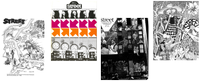
For five years in the 1970s, Pratt Center published Street: A Magazine of the Urban Environment, a semiannual publication during the golden age of the community development movement. The magazine provided practical tools, critical analysis, and visionary ideas to the local organizations and community leaders working to reclaim abandoned housing, clean up destitute streets, and create open space in some of the city's most neglected neighborhoods. “The idea was: What if we look at neighborhoods in a positive way?” remembers Ron Shiffman, Pratt Center’s inaugural director.
Street was more than a handbook; through striking graphic design as well as bold text, it created a space to imagine possibilities for urban revitalization. Street broadened the reach of what planning could encompass: It included articles about food additives, terrariums, hospital expansion, sewage (one of several reprinted from Better Homes and Gardens), and how to create storage containers out of milk cartons. One cover was a graphic screed against the Vietnam War. The magazine also included articles on Pratt Center’s early accomplishments, such as the city’s first mixed-use zoning plan (Issue 12, 11-12).
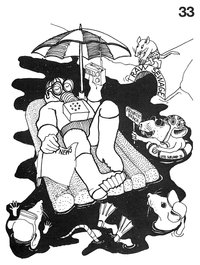
Street was published until 1975, when it merged with the publications of the Association for Neighborhood and Housing Development and the Urban Homesteading Assistance Board to become City Limits, an independent magazine focused on urban housing issues.
Street’s Impact
Laura Wolf Powers writes about the historical context and legacy of Street:
“With provocative illustrations and articles that run the gamut from public policy to “how-to,” this publication (issued irregularly in batches of 5,000, with 2,000 distributed through the mail to the staff and leaders of community organizations and the remaining 3,000 through local anti-poverty agencies and public libraries) was path-breaking in several ways. First it anticipated the urban environmental movement, providing information about new federal and state policies governing air and water quality while at the same time offering advice on recycling, alternative transportation and urban agriculture that would not seem out of place in a planning magazine today[…]
Second, During a time of disinvestment in New York City’s working-class and low-income communities, STREET offered a defiant counterpoint to mainstream news reports of job and population loss, crime, and property abandonment. Notices of newly installed streetlights, local festivals, block beautification campaigns, and new housing construction testified to the loosely organized yet passionate community-building activity that persisted through decline…Finally, the magazine covered and supported the emerging neighborhood housing movement[…]
Over the course of the 1970s, dozens of efforts like the ones documented in STREET convinced city government to embrace the role of community-based organizations in developing and managing low- and moderate-income housing and solidified these groups as important players in the system of social housing production.”
[See Intractable Democracy, pp.52–55]
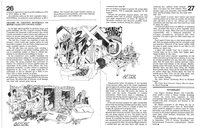
For a fuller treatment of Street Magazine’s impact, see Laura Wolf Powers, Expanding Planning’s Public Sphere: STREET Magazine, Activist Planning, and Community Development in Brooklyn, New York, 1971–1975, published in the Journal of Planning Education and Research 28, in 2008.
Inspired by Street
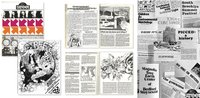
Street magazine covered a variety of urban environmental issues, big and small, from legislative actions to street tips on how to host a block party, in a robust and dynamic yet no-frills verbal and visual language. In 2020, Pratt Center launched a new visual identity that drew inspiration from Street's aesthetic and attitude by reviving some of the magazine’s visual language. For example the new identity utilizes:
- Bold and dynamic typography for headings and straightforward body text typography.
- Helvetica as the primary typeface, as it is neutral, pragmatic, democratic, and timeless—prevalent from the days of Street magazine to now.
- More expressive, vernacular typefaces, borrowed from Street, to distinguish different projects and subject matter
- Hand-drawn illustrations of diverse styles and one-color/simplified photographs
- All and all, more personal, playful but to-the-point and accessible verbal and visual communication
Read more about Pratt Center’s visual identity in our September 2020 newsletter.
ISSUES ARCHIVE
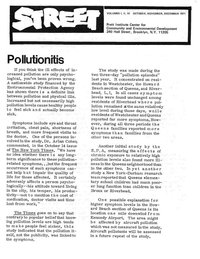
December 1971
Downloads
The inaugural issue of STREET was comprised of 3 issues. Kicking off with a study about pollution-related illnesses in New York, this issue also explains how to access food stamps and reports on innovative education models.
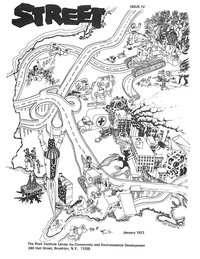
January 1972
Downloads
This issue highlights successes in tenant organizing, suggests the reuse of milk cartons for a range of household purposes, and advises citizens on how to “be a water watcher” to spot pollution and fish kills.
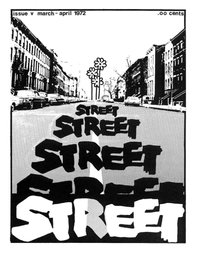
March-April 1972
Downloads
This Earth Day edition highlights several environmental initiatives for citizens to take part in. They include choosing the right bike for your commute, repurposing household items that can’t be recycled, and a section explaining the progress of environmental legislation.
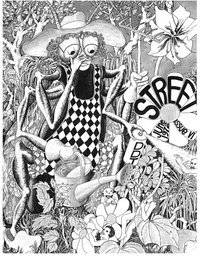
June 1972
Downloads
Including a how-to guide to prep your bike for summer, a recipe for homemade pesticides for household pests, and instructions for sprouting grains, this issue is full of instructions to help you save money while living more sustainably.
October 1972
Downloads
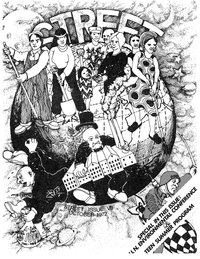
Healthcare inequality is at the center of this issue. Also included are tips for getting the most out of your laundry detergent, a review of a new Brooklyn Museum exhibit showcasing ornamentation taken from demolished buildings, and a breakdown of which foods provide key nutrients.
Winter 1972-73
Downloads
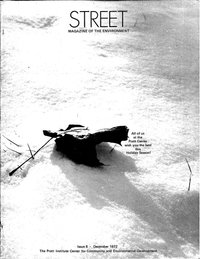
This issue includes articles on noise pollution and urban design. It also features news about several community groups working in the arts and on environmental issues.
February 1973
Downloads
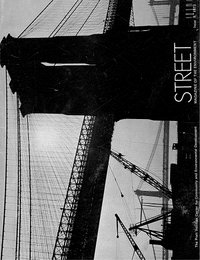
In this issue, the Gowanus Canal and industrial pollution are highlighted. Also featured are designs for convertible furniture for “more livable” apartments, and an argument for decentralization of city services.
Summer / Fall 1973
Downloads
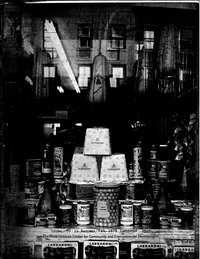
Beginning with a photo essay on Williamsburg, this issue covers the different types of pollution plaguing New York. The Street Tips section encourages citizens to enrich their communities by hosting block parties, forming block associations, and improving vacant lots.
Winter 1973-74
Downloads
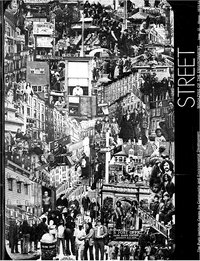
Crown Heights is showcased in this issue with a photo essay about the diversity of the neighborhood. Fire risks are the focus of this issue’s Street Tips. There is also a guide to painting the inside of your home and a “save-a-watt” crossword game.
Fall 1974
Downloads
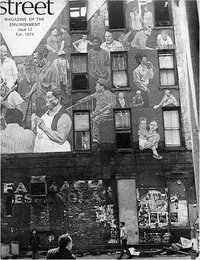
This issue includes PICCED a History, which explores the origins and growth of Pratt Center over its first ten years. There is also a section devoted to why neighborhoods are important and how to build one, a photo essay on Bedford Avenue, and many recommendations for and updates on local businesses.
Summer 1975
Downloads
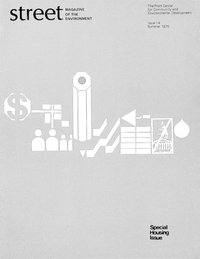
This edition highlights a workbook Using Your Money to Beat Down Costs, put together by Citibank to help citizens combat the effects of inflation. The issue also has a significant focus on housing equity and development.
Winter 1975
Downloads
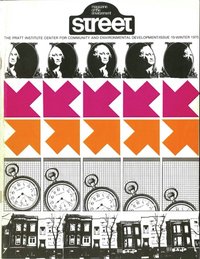
This issue kicks off with a piece advocating for citizen participation in the revision of the New York City Charter. Another section of Using Your Money to Beat Down Costs is included alongside a “special housing supplement” highlighting solutions to redlining, planning in a “crisis climate,” and solutions for abandoned housing.