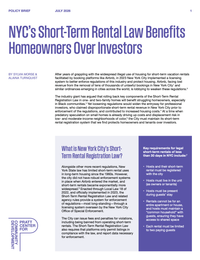
This policy brief analyzes New York City’s Short-Term Rental Registration Law, first implemented in 2023, and its impacts on low- and moderate-income homeowners in one- to two-family homes and professional investors in the short-term rental market.
Background
After years of advocacy from housing and labor organizations to address the widespread illegal use of housing for short-term vacation rentals, in 2023 New York City implemented a licensing system to better enforce long-standing regulations. Industry lobbyists have argued that rolling back key components of the Short-Term Rental Registration Law in one- and two-family homes will benefit struggling homeowners.
Yet loosening regulations would widen the entryway for professional investors, who claimed disproportionate short-term rental revenue in New York City prior to enforcement of the regulations, and contributed to increased housing costs.
At a time when predatory speculation on small homes is already driving up costs and displacement risk in low- and moderate-income neighborhoods of color, the city must maintain its short-term rental registration system designed to protect homeowners and tenants over investors.
To understand the impact of New York City’s Short-Term Rental Registration Law on homeowner and investor operators, Pratt Center analyzed short-term rentals that are regulated under this law as well as “unregulated” segments of the booking platform market. Read more about our methodology in the brief.
Key Findings
Our research indicates that the city’s short-term rental registration system primarily benefits homeowners in low- and moderate-income areas while helping to protect long-term housing and residents from persistent investor speculation. Key findings are:
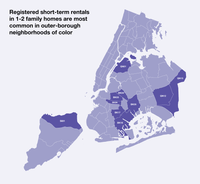
1. Current short-term rental regulations primarily benefit homeowners in outer-borough neighborhoods of color. The majority (63%) of licensed short-term rentals are in one- and two-family homes, mostly owned by residents in outer-borough neighborhoods of color. Prior to the registration system, the short-term rental market was concentrated around central Manhattan and disproportionately benefited professional hosts.
2. The booking platform rental market shows risks of investor speculation, even with regulations.
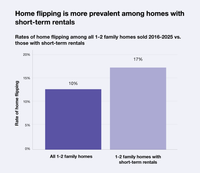
Short-term rentals are associated with home flipping and higher sale prices compared to other small homes. Among one- and two-family homes sold in the past ten years, those with registered short-term rentals have a higher median sale price and are more likely to have been flipped. Community Districts with the most short-term rentals in one-and two-family homes tend to have higher rates of home flipping than the citywide rate for small homes.
Rental listings of 30 days or more—which are not subject to current short-term rental regulations—are growing among professional hosts and investors. This sector has grown in New York City and nationally since the implementation of regulations on short-term listings of less than 30 days. Investors may be well-poised to return to the short-term rental market if regulations were weakened.
Recommendations include:
Maintain the existing Short-Term Rental Registration Law, which data shows is prioritizing short-term rental listings from individual owners of one- and two-family homes over investors.
Advance policy and invest in programs at the city and state level to help homeowners afford to stay in their homes and mitigate displacement risk, many of which are priorities in the Mamdani administration’s housing plan.
This research was conducted in collaboration with Neighbors Not Profits, a coalition of housing, labor, and community organizations that advocates to maintain existing short-term rental laws and regulations in New York City and for housing affordability.